
What is it like to work with me?
-
I'm Emily. I'm a clinical social worker, a neurodivergent person, and someone who genuinely considers this my dream job — which I realize sounds a little unhinged, but here we are.
I came to this work because I understand what it's like to move through a world that wasn't quite designed for how your brain works. That shapes everything about how I show up for clients.
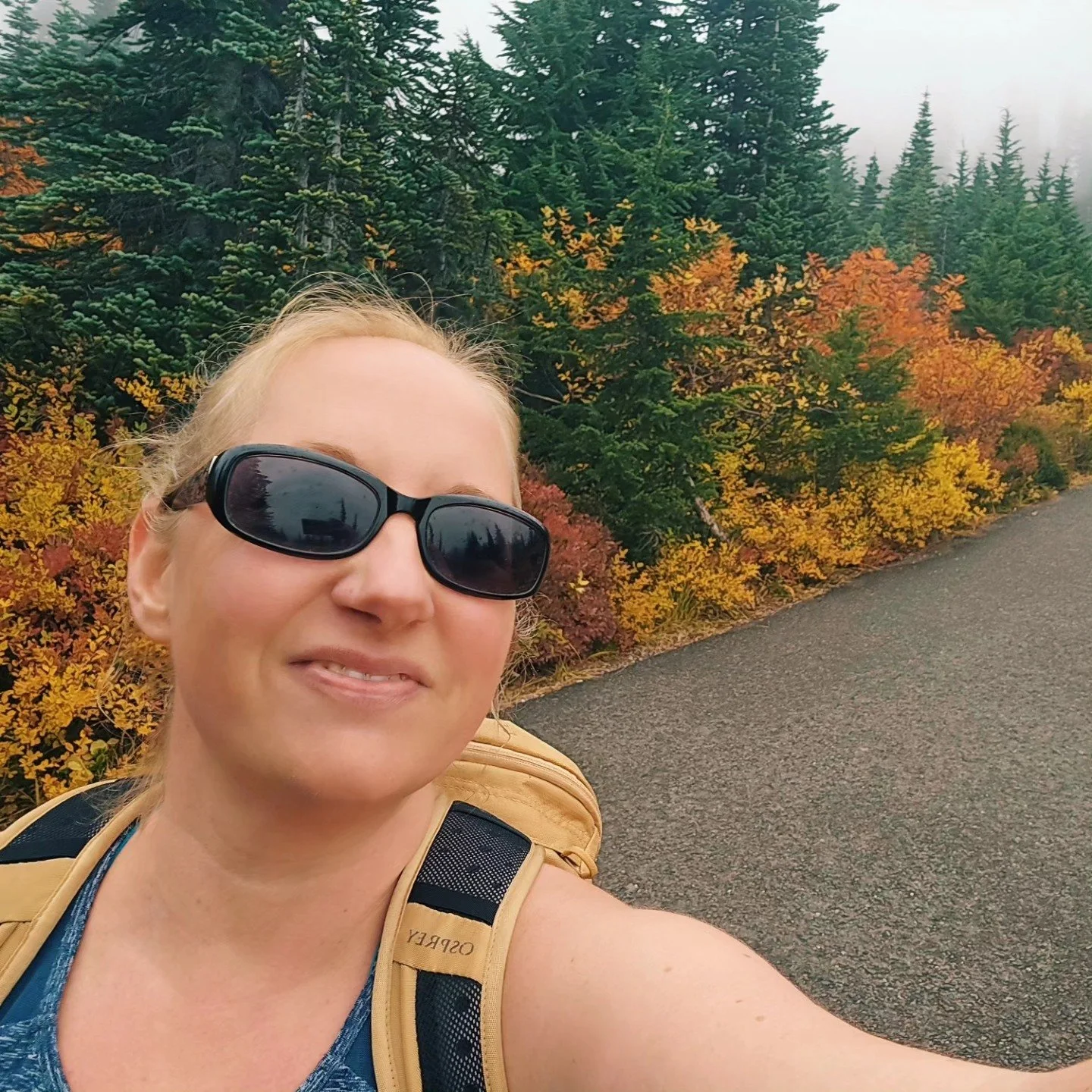
Outside of sessions, I'm usually on a walk that's technically a hike but involves a lot of standing still taking photos of moss, or at home with my two dogs, or deep in a non-fiction book I'll probably tell you about if you give me an opening.
I'm based in Washington and work with clients virtually across the state.
-
Most of my clients are adults who look fine from the outside. Functional, even high-achieving. And exhausted in a way that's hard to explain to people who haven't felt it.
A lot of them grew up in environments where they learned to manage other people's emotions, shrink themselves, or perform a version of themselves that was easier for others to handle. Those adaptations made sense then. They tend to create problems now — in relationships, at work, in the constant low hum of anxiety or disconnection that follows you around.
I also work with older teens and young adults, people navigating relationship structures outside the mainstream (ENM, polyamory, kink), and clients from LGBTQ+ and BIPOC communities who are tired of having to educate their therapist before the real work can start.
-
I use an integrative approach, which is a clinical way of saying: I don't think one modality works for everyone, so I pull from several. Depending on what's most useful for you, we might draw on CBT, parts work (IFS), psychodynamic exploration, or person-centered conversation. Sessions are a blend of reflection and practical strategy — not one or the other.
I'm also trauma-informed and neurodivergent-affirming. If you have ADHD, autistic traits, sensory sensitivities, or you've just always processed the world a little differently, that shapes how we work together. A lot of my clients arrive believing something is fundamentally wrong with them. Usually the more interesting question is: wrong for what?
I look at the full picture — nervous system, history, sleep, environment, relationships, workload. Not just symptoms.
-
Casual and warm. No clipboard energy. You don't have to have it figured out before you come in — most people don't. We'll explore what's going on with curiosity rather than judgment, and move at a pace that actually works for you.
You're the expert on your own life. I'm here to help you make sense of it.
-
Starting therapy is a big step, especially if you've had experiences that left you feeling misunderstood or like you had to perform wellness for your therapist. I offer a free 15-minute consultation — no pressure, just a chance to see if we're a good fit.
You've spent a long time adapting to things that weren't built for you. This part doesn't have to be that hard.